The Algorithm as Middleman: Dopamine, Division, and the New Digital Wages of Compliance
- SU

- Aug 27, 2025
- 5 min read

Introduction
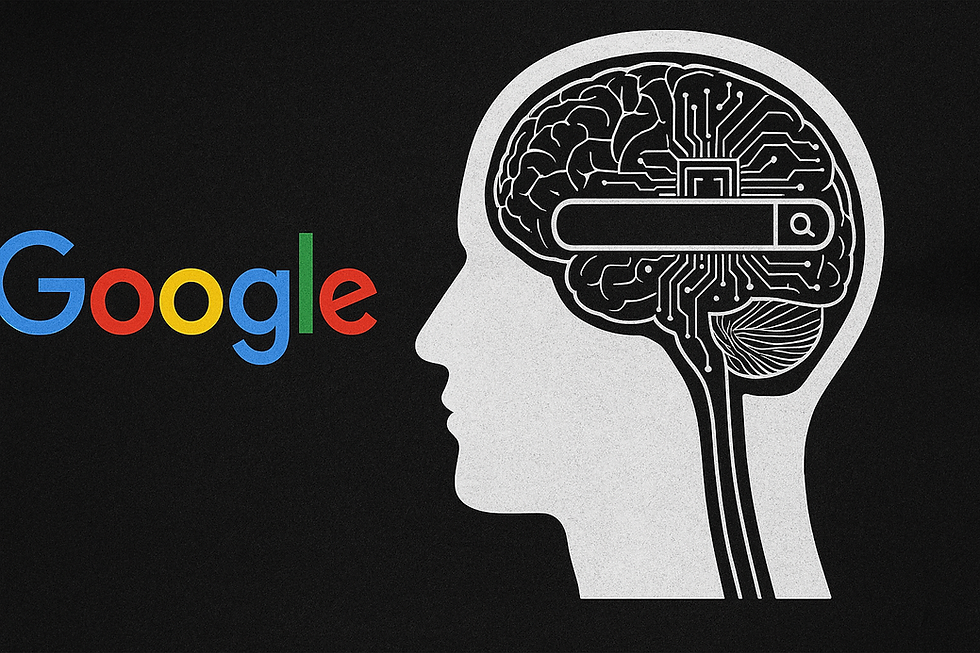
The modern algorithm is not simply a tool for information delivery; it has evolved into a behavioral manager, exploiting fundamental neural pathways and reshaping the foundations of human interaction. Far from passive, algorithms actively sculpt identity, direct attention, and administer economic incentives. What emerges is a system where belonging is conditioned, dissent is suppressed, and influence is monetized, often in ways that reflect the interests of technocratic stakeholders rather than democratic principles.
Neural Hijacking: The Dopamine Switchboard
The mesolimbic dopamine pathway, central to reward and motivation, evolved to reinforce adaptive behaviors such as food seeking, reproduction, and tribal bonding. Key structures include:
Ventral Tegmental Area (VTA): generates dopamine signals.
Nucleus Accumbens (ventral striatum): integrates these signals, evaluating reward value.
Prefrontal Cortex: uses this information to guide decision-making.
This circuit is often referred to as the brain’s dopamine switchboard, and its activity is strongly linked to reinforcement learning. Social belonging, reputation, and approval are powerful drivers of striatal activity (Meshi et al., 2013). Neuroimaging studies confirm that online approval (e.g., likes, shares) activates the nucleus accumbens in ways strikingly similar to tangible rewards such as money or food (Sherman et al., 2016).
In effect, algorithms that deliver intermittent social rewards replicate variable ratio reinforcement schedules, the same conditioning mechanism that keeps gamblers at slot machines. This form of reward scheduling is recognized as the most powerful in operant conditioning (Skinner, 1953).
Echo Chambers and Algorithmic Policing
Algorithms not only deliver rewards; they also shape the context in which social identity develops.
Echo Chambers: By curating content to maximize engagement, algorithms privilege information that aligns with existing beliefs. This reinforces confirmation bias and creates self-contained environments where shared ideology becomes a proxy for belonging.
Threat Amplification: Opposing viewpoints are algorithmically surfaced in ways that stimulate the amygdala, the brain’s threat-detection system. Research shows that exposure to counter-attitudinal political information activates amygdala responses associated with threat and defensiveness (Kaplan et al., 2007).
Crucially, algorithms also suppress dissent. Posts that deviate from consensus narratives are quietly de-ranked or hidden. The absence of peer validation—fewer likes, fewer comments—removes the dopamine feedback loop. This lack of social reinforcement breeds isolation and insecurity, subtly nudging behavior back into alignment with platform-sanctioned norms.
The result is not simply amplification of tribal divisions, but active policing of discourse, where dissent is economically and psychologically disincentivized.
Monetization as Behavioral Conditioning
Parallel to these neurocognitive effects, algorithms structure economic incentives around attention. Advertising-based revenue models and creator funds transform engagement into a form of low-pay base income.
Influencers as Behavioral Agents: The term “influencer” is not incidental. Influencers shape behavior not by conveying truth, but by aligning content with algorithmic priorities. Their reward is visibility, monetization, and social capital.
Compliance as Currency: Platform monetization operates on a principle similar to conditional cash transfers in economics—rewards are contingent upon compliance with behavioral expectations. Content aligned with engagement-maximizing norms (often outrage, novelty, or conformity) is rewarded; content misaligned with these norms is suppressed.
The Wage System of Platforms: This creates what can be described as a technocratic wage system. It resembles a form of base income, but one where payment is conditional upon behavioral conformity. Unlike universal basic income, which secures freedom from coercion, digital wages bind individuals more tightly to platform values.
Behavioral economics provides a framework for this dynamic. Thaler and Sunstein’s (2008) concept of nudging highlights how subtle cues shape decision-making without overt force. Yet algorithmic monetization extends beyond nudging by tying neural reinforcement to economic survival. This combination makes compliance both psychologically addictive and materially rewarding.
The Stakeholders of Digital Democracy
The convergence of neurobehavioral conditioning and economic incentives must be viewed within a broader political economy. Control of algorithms rests in the hands of technocratic stakeholders—platform corporations, data brokers, and policy actors—who frame themselves as stewards of democratic connectivity while consolidating unprecedented influence over public discourse.
Platforms as Gatekeepers: Algorithms dictate visibility and therefore legitimacy. To exist in digital public space is to exist within their boundaries.
Stakeholder Democracy: In this model, “stakeholders” (corporations, NGOs, supranational institutions) wield influence equivalent to or greater than elected governments. Algorithmic control becomes an instrument of governance, mediating which ideas are amplified, which are ignored, and which are punished.
Economic Enclosure: By linking visibility and monetization, stakeholders convert digital interaction into a controlled labor market where influence is currency. In this market, compliance is rewarded and dissent is economically disincentivized.
The effect resembles a modernized form of enclosure, where digital commons are privatized and access is conditioned upon adherence to stakeholder priorities.
The Algorithm as Disciplinary Apparatus
When viewed through the combined lenses of neuroscience, economics, and political theory, the algorithm emerges as a disciplinary apparatus rather than a neutral tool.
Carrot and Stick: Dopamine rewards function as carrots; algorithmic suppression and demonetization operate as sticks.
Policing of Identity: Tribal affiliations are reinforced, but only in ways that serve engagement metrics. Dissenting identities are penalized through visibility loss.
Managed Reality: By determining which narratives are viable, algorithms effectively script reality—not reflecting human behavior, but actively constructing it.
Michel Foucault’s concept of disciplinary power—where institutions shape behavior not through overt force but through continuous surveillance and subtle conditioning—is realized digitally through algorithmic governance. The prison is invisible, and the mechanisms of control are disguised as neutral engagement.
Conclusion: Influence as Illusion
The language of platforms suggests empowerment: creators are “influencers,” communities are “connected,” and monetization is framed as democratized opportunity. Yet beneath this language lies a system where the algorithm is the true influencer.
Social validation is rationed to condition conformity.
Economic rewards are distributed to reinforce compliance.
Opposition is punished not by censorship alone, but by engineered invisibility.
What appears as community is better understood as a digital prison yard where belonging is administered by machine logic. The guard tower is the algorithm itself—ever-present, opaque, and adaptive.
Algorithms no longer merely present information; they actively govern the conditions of reality. By exploiting mesolimbic pathways, by tying visibility to monetization, and by embedding themselves within political-economic structures, they transform connection into commerce and truth into compliance.
The illusion of influence is maintained by rewarding participation in the system. Yet influence flows one way: from the algorithm, through individuals, back to the stakeholders who designed it.
References
Meshi, D., Morawetz, C., & Heekeren, H. R. (2013). Nucleus accumbens response to gains in reputation for the self relative to gains for others predicts social media use. Frontiers in Human Neuroscience, 7, 439.
Sherman, L. E., Payton, A. A., Hernandez, L. M., Greenfield, P. M., & Dapretto, M. (2016). The Power of the Like in Adolescence: Effects of Peer Influence on Neural and Behavioral Responses to Social Media. Psychological Science, 27(7), 1027–1035.
Kaplan, J. T., Freedman, J., & Iacoboni, M. (2007). Us versus them: Political attitudes and party affiliation influence neural response to faces of presidential candidates. Neuropsychologia, 45(1), 55–64.
Skinner, B. F. (1953). Science and Human Behavior. New York: Macmillan.
Thaler, R. H., & Sunstein, C. R. (2008). Nudge: Improving Decisions About Health, Wealth, and Happiness. Yale University Press.
Foucault, M. (1975). Discipline and Punish: The Birth of the Prison. Vintage Books.